



Depression has become one of the most pressing mental health challenges affecting young adults worldwide. The transition from adolescence to adulthood is often portrayed as an exciting journey filled with opportunities, independence, and personal growth. However, for many young people, this stage of life also brings overwhelming responsibilities, emotional struggles, and constant pressure to succeed. These challenges can significantly impact mental well-being and increase the risk of depression.
Young adulthood, typically between the ages of18 and 29, is a period of major life changes. Whether it’s pursuing higher education, starting a career, managing finances, building relationships, or discovering one’s identity, every new responsibility can become a source of stress. While occasional sadness is a normal part of life, depression is much more than feeling down for a few days. It is a serious mental health condition that affects emotions, thoughts, physical health, and daily functioning.
Let’s explore why depression is becoming increasingly common among young adults and how it can be recognized, treated, and prevented.
What Is Depression?
Depression is a common but serious mental health disorder that causes persistent feelings of sadness, hopelessness, and a loss of interest in activities that once brought happiness. Unlike temporary stress or disappointment, depression lasts for at least two weeks and can interfere with work, studies, relationships, and everyday life.
People experiencing depression often struggle to find motivation, maintain concentration, or enjoy even simple daily activities. Without proper support, depression can become severe and affect both mental and physical health.

Why Are Young Adults More Vulnerable to Depression?
Young adulthood is a unique stage where individuals experience rapid personal, social, and professional changes. These transitions often create emotional challenges that can increase the likelihood of developing depression.
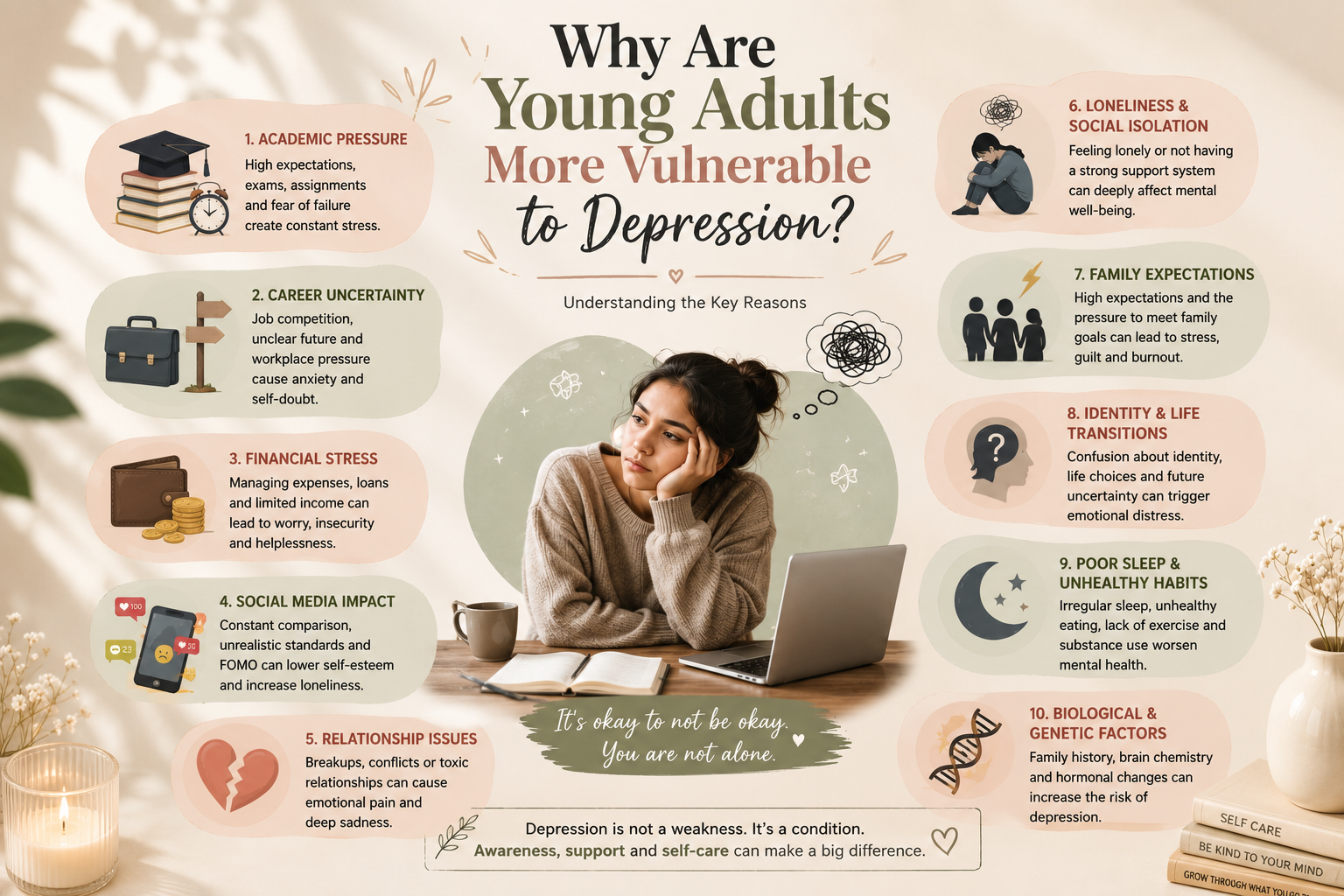
1. Academic Pressure and Performance Anxiety
Education is one of the biggest sources of stress for young adults. Students often face intense competition, difficult examinations, assignment deadlines, and pressure to achieve excellent grades.
Many young people worry about securing admission to prestigious universities or obtaining scholarships. Fear of failure and constant comparison with classmates can gradually reduce self-confidence and lead to emotional exhaustion.
When academic expectations become overwhelming, stress may develop into anxiety or depression.
2. Career Uncertainty and Job Pressure
After graduation, many young adults enter a highly competitive job market. Finding stable employment is not always easy, and repeated job rejections can damage self-esteem.
Even after securing a job, workplace challenges such as long working hours, demanding deadlines, heavy workloads, and limited work-life balance can negatively affect mental health.
The uncertainty of career growth and financial stability often creates ongoing stress that contributes to depression.
3. Financial Difficulties
Financial independence is an important milestone, but it can also become a major burden.
Young adults frequently struggle with:
- Student loan repayments
- Rent and housing expenses
- Rising living costs
- Credit card debt
- Limited savings
- Supporting family members
Constant financial pressure creates chronic stress, making it difficult to feel secure about the future.
4. Social Media Comparison
Social media has become deeply integrated into everyday life. While it helps people stay connected, excessive use can have harmful effects on mental health.
Many young adults compare themselves to carefully edited images of other people’s lives, careers, relationships, and achievements.
This comparison often leads to:
- Low self-esteem
- Body image concerns
- Fear of Missing Out (FOMO)
- Feelings of inadequacy
- Increased loneliness
Remember, social media usually shows highlights rather than reality.
5. Relationship Problems
Relationships play a significant role during young adulthood.
Emotional distress may result from:
- Breakups
- Divorce
- Family conflicts
- Toxic relationships
- Emotional abuse
- Unhealthy communication
The end of an important relationship can trigger sadness, loneliness, and depression, especially when emotional support is limited.
6. Loneliness and Social Isolation
Although technology allows people to communicate instantly, many young adults still experience loneliness.
Moving away for college, relocating for work, or living independently can reduce face-to-face interactions with family and friends.
Loneliness is now recognized as an important contributor to depression because humans naturally need meaningful social connections.
7. Family Expectations
Parents often want the best for their children, but extremely high expectations can become overwhelming.
Young adults may feel pressure to:
- Achieve academic success
- Secure a high-paying job
- Get married by a certain age
- Meet family expectations
- Maintain a successful lifestyle
When these expectations seem impossible to achieve, feelings of guilt and failure may develop.
8. Identity and Life Transitions
Young adulthood is a period of self-discovery.
People begin asking important questions such as:
- Who am I?
- What career should I choose?
- What are my goals?
- Where do I belong?
Uncertainty about identity, future plans, or life purpose may increase emotional stress and contribute to depression.
9. Poor Sleep Habits
Sleep plays an essential role in maintaining emotional well-being.
Unfortunately, many young adults experience poor sleep because of:
- Late-night studying
- Long working hours
- Excessive screen time
- Gaming
- Social media
- Stress
Insufficient sleep affects brain function, mood regulation, concentration, and emotional resilience.
10. Unhealthy Lifestyle Choices
Lifestyle habits strongly influence mental health.
Risk factors include:
- Lack of exercise
- Poor nutrition
- Skipping meals
- Excessive junk food consumption
- Smoking
- Alcohol misuse
- Drug use
Physical health and mental health are closely connected, making healthy habits essential for emotional well-being.
11. Biological and Genetic Factors
Depression is not caused only by life experiences.
Some people have a higher risk because of:
- Family history of depression
- Brain chemistry
- Hormonal changes
- Certain medical conditions
Having a genetic predisposition does not guarantee depression, but it may increase vulnerability when combined with stressful life events.
12. Traumatic Experiences
Past traumatic events can have long-lasting emotional effects.
Examples include:
- Childhood abuse
- Bullying
- Loss of a loved one
- Domestic violence
- Serious accidents
- Natural disasters
Trauma may affect emotional regulation and increase the likelihood of depression later in life.
Common Symptoms of Depression in Young Adults
Recognizing symptoms early allows people to seek help before depression becomes severe.
Common symptoms include:
- Persistent sadness
- Feeling hopeless
- Loss of motivation
- Loss of interest in hobbies
- Difficulty concentrating
- Changes in appetite
- Weight gain or loss
- Sleeping too much or too little
- Fatigue
- Irritability
- Feelings of worthlessness
- Withdrawal from family and friends
- Thoughts of death or suicide
Symptoms vary from person to person and may range from mild to severe.
Effects of Depression on Daily Life
Depression affects nearly every aspect of life.
It may lead to:
- Poor academic performance
- Reduced work productivity
- Relationship difficulties
- Social withdrawal
- Low self-confidence
- Physical health problems
- Increased substance use
- Difficulty making decisions
Without treatment, depression may become chronic and significantly reduce quality of life.
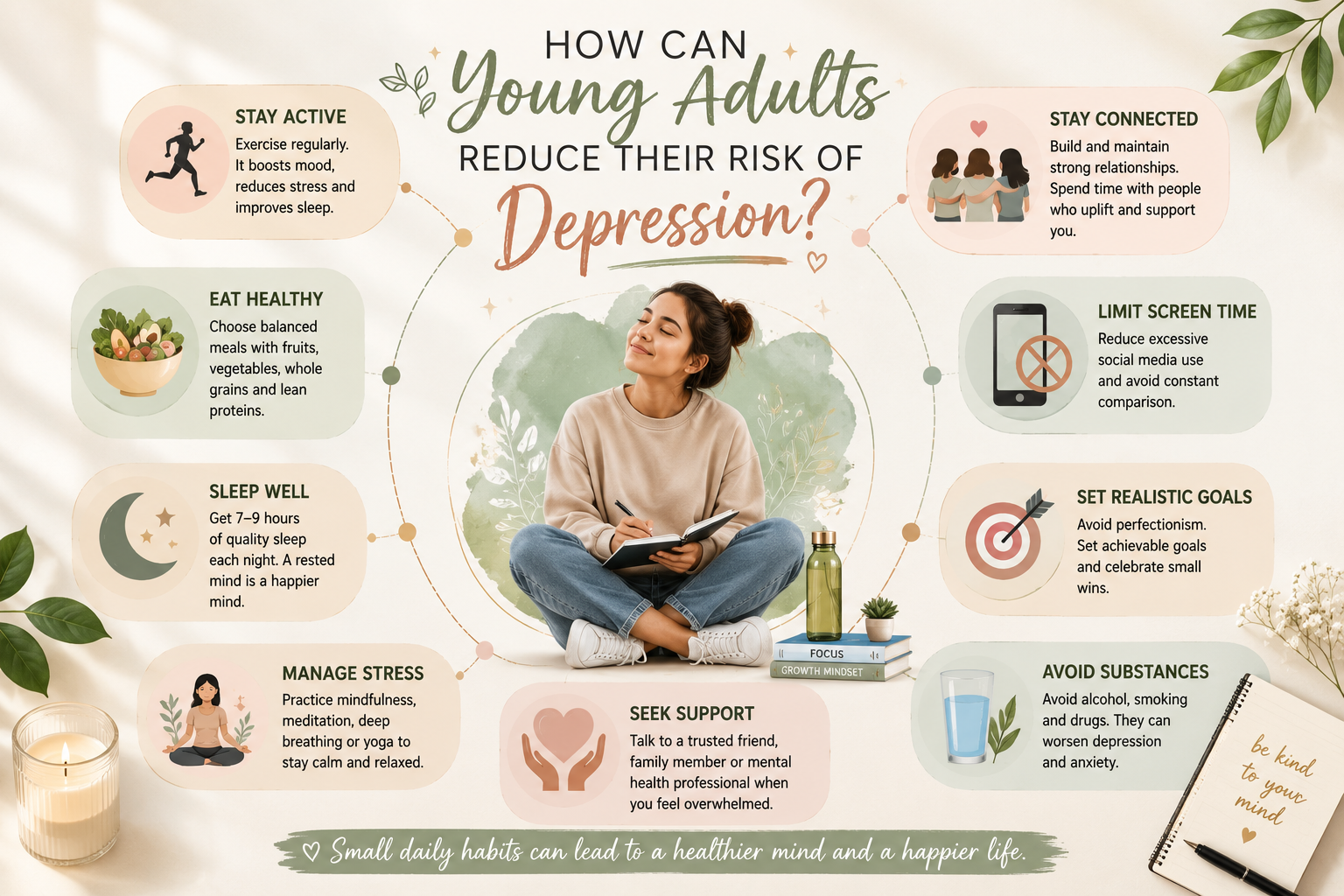
How Can Young Adults Reduce Their Risk of Depression?
Although depression cannot always be prevented, healthy habits can reduce risk and improve emotional resilience.
Helpful strategies include:
- Exercise regularly.
- Eat a balanced diet rich in fruits, vegetables, and whole grains.
- Maintain a consistent sleep schedule.
- Limit excessive social media use.
- Build strong friendships and family connections.
- Practice mindfulness, meditation, or yoga.
- Set realistic goals instead of chasing perfection.
- Take regular breaks from work or study.
- Avoid alcohol and recreational drugs.
- Seek professional support when symptoms persist.
Small lifestyle changes can make a meaningful difference over time.
Treatment Options for Depression
Depression is a treatable medical condition.
Treatment may include:
Psychotherapy
Talking therapies such as Cognitive Behavioral Therapy (CBT) help people recognize and change unhelpful thought patterns.
Medication
Healthcare professionals may prescribe antidepressants for moderate to severe depression. Medication should only be taken under medical supervision.
Lifestyle Changes
Regular physical activity, healthy eating, quality sleep, and stress management can support recovery.
Support Systems
Family, friends, teachers, mentors, and support groups provide emotional encouragement during recovery.
Seeking help early often leads to better outcomes.
Conclusion
Young adulthood is a period filled with opportunities, dreams, and personal growth, but it also comes with significant challenges. Academic pressure, career uncertainty, financial stress, relationship difficulties, social media comparison, loneliness, family expectations, and lifestyle factors all contribute to the growing rates of depression among young adults. While these challenges can feel overwhelming, depression is a treatable condition, and recovery is possible with the right support, healthy habits, and professional care. By recognizing the warning signs early and promoting open discussions about mental health, we can help young adults build resilience, improve emotional well-being, and lead healthier, more fulfilling lives.