






A Match That Sparked the Nottingham Forest PGMOL Complaint
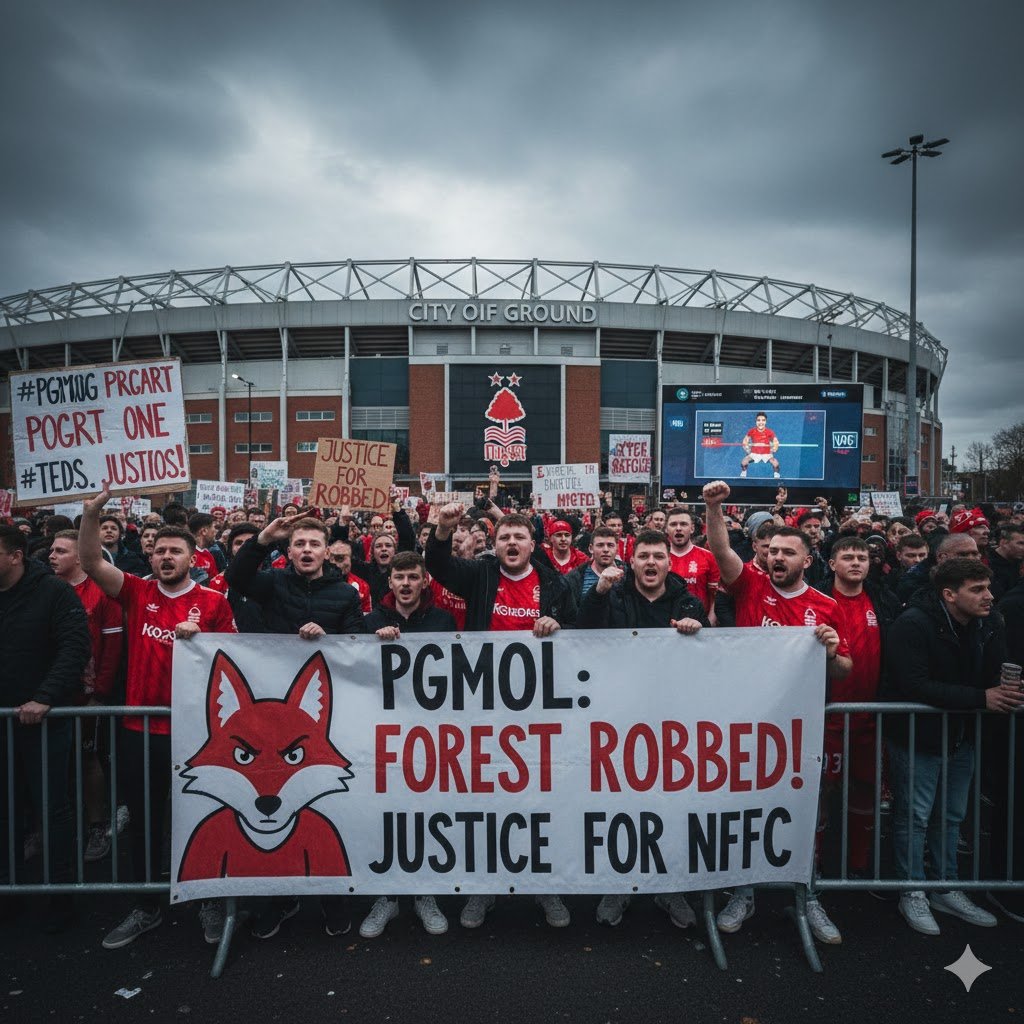
Nottingham Forest PGMOL complaint has shaken the Premier League after a controversial defeat against Manchester City. The match raised serious questions about VAR decisions, referee consistency, and transparency in football officiating. Football is a game of moments — but sometimes, those moments spark storms far beyond the final whistle. That’s exactly what happened after Nottingham Forest’s controversial 2–1 defeat to Manchester City, a match that has now escalated into a formal complaint against the Professional Game Match Officials Limited (PGMOL).
What should have been a routine Premier League fixture turned into a heated talking point across England. At the center of it all? Two major refereeing decisions, a furious Forest camp, and growing questions about consistency in officiating.
As a result, Nottingham Forest lodged an official complaint with PGMOL, demanding transparency and accountability. And now, the football world is paying attention.
What Triggered Nottingham Forest’s Complaint to PGMOL?
The controversy unfolded late in the second half at the City Ground when Manchester City snatched a dramatic win. While goals often steal headlines, this time the spotlight fell on refereeing decisions that Forest believe directly influenced the outcome.
Two incidents in particular raised eyebrows:
-
Rayan Cherki’s late winning goal, which Forest argue should have been disallowed.
-
Rúben Dias avoiding a second yellow card, despite a challenge that appeared worthy of punishment.
Together, these moments formed the foundation of Forest’s formal grievance.
The Decisive Moment: Was There a Foul in the Build-Up?
Let’s start with the goal that sealed the match.
In the closing stages, Manchester City pushed forward aggressively. The ball eventually fell to Rayan Cherki, who calmly finished to give City a crucial 2–1 lead.
However, Forest players immediately protested.
Why?
Because moments earlier, Morgan Gibbs-White appeared to be bundled over during the buildup. Forest argued that the challenge disrupted their defensive shape and should have resulted in a foul — potentially nullifying the goal.
Despite protests, referee Rob Jones allowed play to continue.
VAR reviewed the incident… and decided not to intervene.
That decision alone sent shockwaves through the Forest bench.
The Rúben Dias Incident: A Second Yellow Ignored?
Earlier in the match, another controversial moment unfolded.
Manchester City defender Rúben Dias, already on a yellow card, clipped Forest forward Igor Jesus as he broke beyond the defensive line.
To many observers, the challenge looked like a tactical foul — the kind that often earns a second booking.
Yet again, the referee waved play on.
Because it was not deemed a “clear and obvious” red-card offence, VAR could not step in. That technicality only deepened Forest’s frustration.
Sean Dyche Reacts: “I Was Absolutely Stunned”
After the final whistle, Forest manager Sean Dyche didn’t hold back.
Speaking to reporters, he said he was “absolutely stunned” by the decisions that went against his side.
His tone wasn’t theatrical — it was controlled but visibly frustrated.
From Dyche’s perspective, these weren’t marginal calls. They were pivotal moments that altered the outcome of a game his team had fought hard to control.
Why Nottingham Forest Took the Formal Route
Instead of limiting their reaction to post-match comments, Forest took a more serious step.
According to sources, the club has formally requested the audio recordings between:
- The on-field referee
- The assistant referees
- The VAR team
This request aims to understand how decisions were reached — and whether proper protocols were followed.
It’s a move that reflects growing frustration across the league, not just within Forest.
PGMOL Under Pressure Once Again
This is not the first time PGMOL has faced scrutiny this season.
Clubs have repeatedly raised concerns about:
- Inconsistent application of rules
- Lack of transparency in VAR decisions
- Communication gaps between officials
By formally approaching PGMOL, Nottingham Forest have added fuel to a debate that’s been simmering all season.
As of now, PGMOL has not publicly responded.
Manchester City’s Perspective: Business as Usual
From Manchester City side, the reaction has been measure.
Pep Guardiola avoided controversy, focusing instead on his team’s performance and resilience. City’s win briefly sent them to the top of the Premier League table, before later results saw them drop to second — just two points behind Arsenal.
For City, the three points mattered far more than the noise surrounding them.
A Glimpse at the Bigger Picture: Title Race and Survival Fight
This match had implications far beyond one evening.
- Manchester City are chasing another league title.
- Nottingham Forest are fighting to stay clear of relegation.
That contrast adds emotional weight to every decision. For Forest, a single refereeing call could mean survival or disaster. For City, it could be the difference between glory and regret.
Why Refereeing Controversies Hit Harder Today
In the age of social media, every controversial call is magnified.
Fans slow down footage.
Analysts draw lines.
Former players give instant verdicts.
And suddenly, one decision becomes a global debate.
In this case, the controversy wasn’t just about football — it was about trust.
VAR: A Tool or a Trouble Magnet?
VAR was introduce to eliminate “clear and obvious error.”
Yet many now argue it has created a new problem: selective intervention.
Forest supporters ask:
- Why intervene in some matches and not others?
- Why review some fouls but ignore similar ones?
These inconsistencies fuel frustration — and they’re at the heart of Forest’s complaint.
The Emotional Weight on Players and Fans
For players battling relegation, every point matters.
For fans, every decision feels personal.
That’s why moments like these sting longer. They are forgotten when the final whistle blow — they linger in league table, fan forum, and club office.
What Happens Next?
Here’s what could follow:
- PGMOL may release audio explanations
- Internal review could be conduct
- Referees might receive guidance or reassessment
However, it’s rare for such complaints to lead to public apologies or reversals.
Still, Forest’s action sends a message — silence is no longer acceptable.
A Wider Conversation About Football Governance
This incident highlights a deeper issue in modern football: accountability.
Clubs invest millions.
Players risk careers.
Fans invest emotions.
Yet refereeing decisions often remain shielded from scrutiny.
That imbalance continues to frustrate stakeholders across the game.
More Than Just a Match
The Nottingham Forest PGMOL complaint isn’t just about a single goal or a missed card.
It represents a growing call for clarity, fairness, and transparency in football officiating.
Whether or not PGMOL responds publicly, the message has been sent — clubs are no longer willing to stay silent when decisions shape their destiny.
And as long as football remains fueled by passion, these debates will never truly disappear.
Final Thoughts
Beyond the Whistle
Football is emotional. It’s chaotic. It’s beautiful.
But above all, it must be fair.
As the Premier League continues to evolve, moments like this remind us that technology alone cannot solve human judgment. What matters most is accountability — and the courage to ask difficult questions.
For Nottingham Forest, this isn’t just about one match.
It’s about being heard.